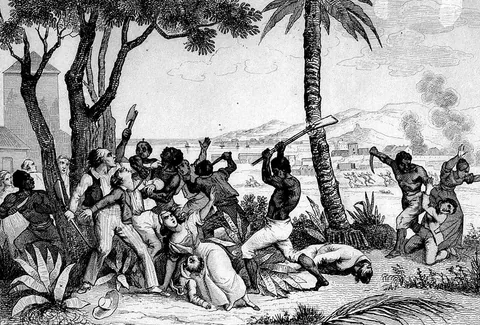

Many of us think of Halloween—ghosts, monsters, and zombies. But the history of the zombie begins in Haiti, not Hollywood. In Haitian folklore, a zombie is said to be a person brought back to life by a bokor, or sorcerer. The word zombi itself has roots in West and Central African languages—fumbi, mvumbi, nsumbi—all referring to spirits or the dead. These stories crossed the Atlantic with enslaved Africans and took new shape in Haiti.
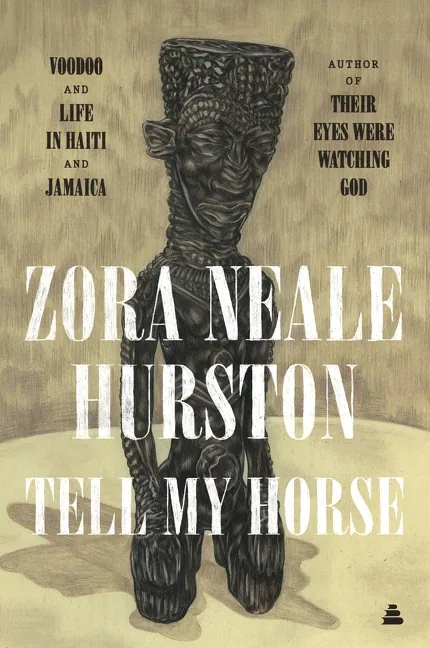
In Tell My Horse: Voodoo and Life in Haiti and Jamaica (1938), Zora Neale Hurston wrote, “This is the way zombies are spoken of: they are the bodies without souls; the living dead.” Haitian scholar Maximilien Laroche later explained, “You become a zombi when a spell is cast on you... to serve a master, to work in his field, in short, to provide cheap labour.”
The zombie, then, can be read as both a symbol of enslavement and a metaphor for rebellion—a reminder of the Haitian Revolution, the only successful slave revolt in the Atlantic world, and of how Black people have long turned horror into stories of liberation. Yet this metaphor has also been critiqued for portraying enslaved people as soulless or without agency—something they never were, no matter how violently oppressed.
When the United States occupied Haiti between 1915 and 1934, American writers rewrote the myth, turning the zombi into the mindless creature familiar in U.S. pop culture. In doing so, they stripped it of its political and spiritual meaning, transforming it into a colonial fantasy of control—a symbolic re-enslavement that robbed self-emancipated Haitians not only of freedom, but of consciousness itself.
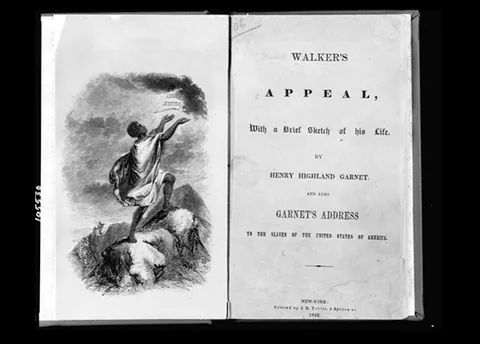
It’s from this lineage of critical fabulation that we turn to our forthcoming publication, Black Study: The Influence of David Walker’s Appeal. In 1829, David Walker published An Appeal to the Coloured Citizens of the World, a radical pamphlet calling for enslaved Black people to revolt. His words inspired Nat Turner’s Rebellion and shaped future movements for abolition.
Black Study traces this lineage through archival photographs of Black people reading and learning across generations. In the same way Haitian thinkers and storytellers reimagined the zombi—from a figure of domination into one of defiance—we believe study and publishing can transform fear into power. Thank you for reading, for studying with us, and for helping keep independent Black publishing alive.